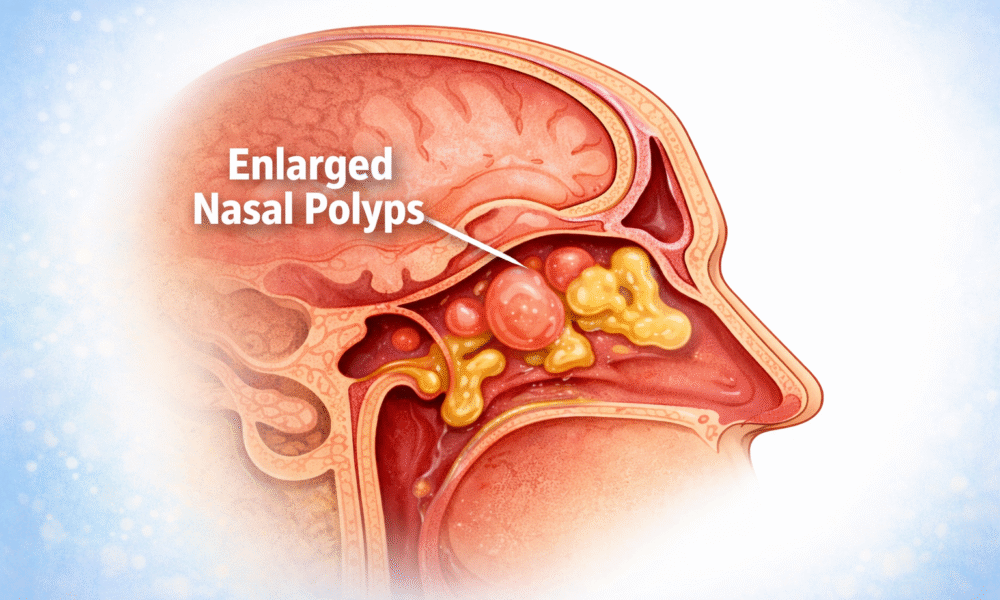




Chronic sinus conditions can be difficult to treat, especially for people who suffer from chronic rhinosinusitis with nasal polyps (CRSwNP). This condition often occurs alongside asthma and can lead to persistent congestion, thick mucus, and blocked sinus passages.
A scientific study led by Tetsuji Takabayashi and published in the journal Allergology International explored whether a natural enzyme called Nattokinase could help address some of these problems.
Why Nasal Polyps Form
Researchers have discovered that many patients with nasal polyps have excess buildup of fibrin, a protein involved in clotting and tissue repair.
When the body’s natural process for breaking down fibrin (called fibrinolysis) does not work properly, fibrin can accumulate in the sinus tissue. This buildup can contribute to:
- Growth of nasal polyps
- Chronic sinus inflammation
- Thick, sticky mucus
- Blocked nasal passages
Because of this, scientists are interested in substances that can break down fibrin deposits.
What Is Nattokinase?
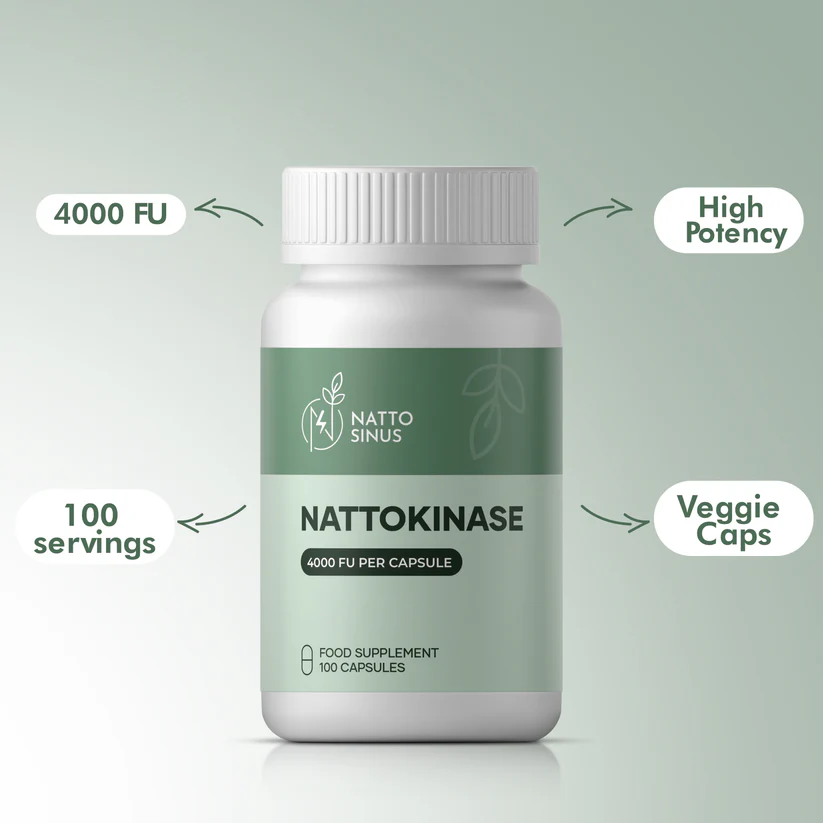
Nattokinase is an enzyme produced during the fermentation of soybeans by the bacterium Bacillus subtilis. It has been widely studied for its strong fibrin-breaking (fibrinolytic) activity.
This ability made researchers curious whether nattokinase could help reduce fibrin buildup in sinus tissue.
How the Study Was Conducted
Researchers collected nasal polyp tissue samples from patients with chronic rhinosinusitis.
The tissues were placed in laboratory conditions and treated with different concentrations of nattokinase for 24 hours. Scientists then examined the tissue to see how the enzyme affected fibrin levels and polyp structure.
They also tested nasal discharge and sputum samples from patients with sinus disease and asthma to see if nattokinase could affect mucus thickness.
Key Findings
The study produced two important findings.
1. Nattokinase Shrunk Nasal Polyp Tissue
The researchers observed that nattokinase broke down fibrin within the nasal polyp tissue, causing the tissue to shrink.
This suggests that fibrin degradation may be a useful approach to reducing the size of nasal polyps.
2. Nattokinase Reduced Mucus Thickness
The enzyme also significantly reduced the viscosity of mucus in both nasal discharge and sputum samples.
Thinner mucus may help improve sinus drainage and make it easier for the body to clear blocked airways.
What This Could Mean for Sinus Health
These findings suggest that nattokinase may help address two major factors in chronic sinus disease:
- Fibrin buildup in nasal polyps
- Thick mucus that blocks sinus passages
By breaking down fibrin and reducing mucus viscosity, nattokinase may offer a promising area of research for supporting sinus and respiratory health.
Important Note
The study was conducted in a laboratory setting using tissue samples. More clinical research is needed to determine how these findings translate into treatments for patients.
However, the results highlight nattokinase’s potential role in supporting healthy sinus function and mucus flow.
Reference
Takabayashi T. et al. (2017). Nattokinase effectively shrinks nasal polyp tissue and decreases mucus viscosity. Allergology International.
No Comment! Be the first one.